
AIMEE2026: The 10th International Conference of Artificial Intelligence, Medical Engineering, Education
October 24 - October 25 , 2026 , Guiyang, China
The 10th International Conference of Artificial Intelligence, Medical Engineering, Education (AIMEE2026)
Guiyang, China
October 24-25, 2026
The 10th International Conference of Artificial Intelligence, Medical Engineering, Education (AIMEE2026) will be held on October 24-25, 2026, in Guiyang, China. The conference is organized jointly by Wuhan University of Technology, the Polish Operational and Systems Society, Hubei University of Technology, and the International Research Association of Modern Education and Computer Science.
The AIMEE2026 will bring together the top researchers from Asian Pacific nations, North America, Europe, and around the world to exchange their research results and address open issues in Artificial Intelligence, Medical Engineering, and Education. The official conference language is English. All the papers need to be written and presented in English.
~^o^~ Please click here to submit your paper.~^o^~
💖 Call for Paper. ( 13-5-2026)
💖 AIMEE2025 conference book has been published online. ( 20-01-2026)
Publication Information
The conference proceedings of AIMEE2026 will be published by "Advances in Transdisciplinary Engineering- IOS Press", which is indexed by EI Compendex, SCOPUS, etc.
Authors are invited to submit original, unpublished manuscripts that demonstrate recent advances in the following areas of interest, but are not limited to:
AREA 1: ARTIFICIAL INTELLIGENCE
1. AI Foundations and Machine Learning
- Artificial Intelligence Theory and Methods
- Neural Networks and Deep Learning
- Supervised, Unsupervised and Semi-supervised Learning
- Reinforcement, Self-supervised and Transfer Learning
- Bayesian Networks and Probabilistic Reasoning
- Foundation Models and Large Language Models
- Multimodal Learning and Generative AI
2. Evolutionary and Bio-inspired Computing
- Evolutionary Computing and Genetic Algorithms
- Evolutionary Learning Systems
- Ant Colony Optimization
- Particle Swarm Optimization
- Artificial Fish School Algorithms
- Swarm Intelligence
- Artificial Life and Artificial Immune Systems
- Multi-objective and Nature-inspired Optimization
3. Fuzzy, Rough and Soft Computing
- Fuzzy Systems and Soft Computing
- Fuzzy Control
- Rough Sets and Fuzzy Rough Sets
- Hybrid Intelligent Systems
- Uncertainty Modeling and Approximate Reasoning
4. Knowledge and Data Intelligence
- Knowledge Discovery and Data Mining
- Knowledge Representation and Reasoning
- Knowledge Management and Knowledge Engineering
- Knowledge Graphs and Semantic Intelligence
- Expert Systems and Intelligent Decision Support
- Intelligent Agents and Multi-agent Systems
5. Intelligent Perception and Human-AI Interaction
- Computer Vision and Pattern Recognition
- Natural Language Processing
- Speech and Audio Intelligence
- Sensor Fusion and Intelligent Perception
- Affective Computing
- Human-Computer and Human-Robot Interaction
- AI-assisted Media and Intelligent Content Creation
6. Intelligent Control and Autonomous Systems
- System Theory and Control Theory
- Nonlinear Systems and Control
- Adaptive and Learning Control
- Robust and H-infinity Control
- Distributed and Networked Control Systems
- Modeling, Identification and Signal Processing
- Process Automation
- Traffic and Transportation Control
7. Robotics and Industrial Intelligence
- Intelligent Mechatronics and Robotics
- Autonomous and Unmanned Systems
- Embodied Intelligence
- Intelligent Vehicles and Automotive Systems
- Intelligent Manufacturing and Industrial Automation
- Computer-integrated Manufacturing Systems
- Digital Twins and Smart Factories
- Predictive Maintenance and Industrial Analytics
8. Networked and Pervasive Intelligence
- Pervasive and Ubiquitous Computing
- Edge Intelligence and Internet of Things
- Communication Network Intelligence
- Cloud-Edge Collaborative Intelligence
- Cyber-Physical Systems
- Federated and Distributed Intelligence
9. AI for Business, Economy and Society
- Intelligent Enterprise Management
- Human-centered Intelligent Management
- Intelligent Supply Chain and Logistics
- Digital Economy and Financial Intelligence
- Business Intelligence and Decision-making
- AI in News, Media and Communication
- Smart Cities and Public Governance
10. Responsible and Sustainable AI
- Explainable and Trustworthy AI
- AI Ethics, Safety and Governance
- Privacy-preserving Machine Learning
- Fairness, Accountability and Transparency
- AI Security and Adversarial Learning
- Green and Sustainable AI
AREA 2: MEDICAL ENGINEERING
1. Bioinformatics and Computational Biology
- Algorithms, Models, Software and Tools in Bioinformatics
- Biological Data Acquisition, Normalization and Visualization
- Computational Evolutionary Biology
- Systems Biology
- Biological Network Modeling
- Novel Computational Approaches to Bioinformatics
2. Genomics, Proteomics and Molecular Systems
- Computational Proteomics
- DNA and RNA Structure, Function and Sequence Analysis
- Gene Regulation, Expression and Identification
- Gene and Molecular Networks
- Structural, Functional and Comparative Genomics
- Multi-omics Data Integration
- Gene Editing Technology Computational Design
- Precision Medicine and Molecular Diagnostics
- AI-driven Drug Discovery and Molecular Screening
3. Biomedical Imaging and Visualization
- Biomedical Imaging and Image Processing
- Medical Image Reconstruction and Visualization
- Computed Tomography and Magnetic Resonance Imaging
- Biomedical Optics
- Image-guided Diagnosis and Intervention
- AI-assisted Medical Imaging
4. Biosignal and Neural Engineering
- Biomedical Signal Processing and Analysis
- Electrocardiography and Physiological Signal Analysis
- Bioelectrical and Neural Engineering
- Brain-Computer Interfaces
- Computational Neuroscience
- Biometric and Biomedical Measurement
- Multimodal Physiological Signal Fusion
5. Biomedical Devices and Health Monitoring
- Biomedical Devices and Instrumentation
- Biomedical Sensors and Biosensors
- Wearable and Implantable Systems
- Health Monitoring Systems
- Artificial Organs
- Point-of-care Technologies
- Medical Internet of Things
6. Biomaterials and Biological Engineering
- Biomaterials
- Biochemistry and Biotechnology
- Cellular, Molecular and Tissue Engineering
- Regenerative Medicine
- Biomechanics and Mechanobiology
- Biomedical Optics and Photonics
- Bioprinting and Organ-on-a-chip Technologies
7. Biomedical Robotics and Rehabilitation
- Biomedical Robotics
- Surgical and Assistive Robotics
- Biomedical Mechanics
- Rehabilitation Engineering
- Prosthetics and Orthotics
- Clinical Engineering
- Human Movement and Gait Analysis
8. Digital Health and Intelligent Medicine
- Artificial Intelligence in Medicine
- Clinical Decision Support Systems
- Digital Health and Medical Informatics
- Telemedicine and Remote Healthcare
- Personalized and Preventive Healthcare
- Healthcare Data Analytics
- Virtual and Augmented Reality in Medicine
9. Medical Ethics and Human-centered Care
- Ethics and Governance in Medical Engineering
- Privacy and Security of Health Data
- Humanistic and Patient-centered Care
- Psychological Support and Digital Mental Health
- Supportive Psychological Interventions
- Accessibility and Inclusive Healthcare Technologies
10. Traditional Chinese Medicine Biomedical Engineering
-Traditional Chinese Medicine Intelligent Diagnosis Equipment & Pulse/Tongue Image Analysis
-Computational Analysis of Traditional Chinese Medicine Syndrome Differentiation & Prescription Optimization
AREA 3: EDUCATION
1. Artificial Intelligence and Data-driven Education
- Artificial Intelligence in Education
- Big Data and Learning Analytics
- Intelligent Tutoring Systems
- Adaptive and Personalized Learning
- Educational Data Mining
- Generative AI in Teaching and Learning
- Automated Assessment and Feedback
2. Digital Infrastructure for Education
- Cloud Computing in Education
- Educational Information Technology
- Smart Learning Environments
- Educational Internet of Things
- Digital Campuses and Virtual Universities
- Educational Technology Standards and Interoperability
- Cybersecurity and Privacy in Education
3. Online, Distance and Blended Learning
- Online and Network-based Education
- Distance and Blended Learning
- Online Courses and Curriculum Development
- Rural and Remote Education
- Massive Open Online Courses
- Mobile and Ubiquitous Learning
- Virtual and Remote Laboratories
4. Technology-enhanced Teaching and Learning
- Computer Education
- Computer-assisted Instruction
- Technology-enhanced Classroom Teaching
- Multimedia and Interactive Learning
- Virtual, Augmented and Mixed Reality in Education
- Gamification and Game-based Learning
- Digital Learning Resources
5. Curriculum, Instruction and Assessment
- Classroom Instruction Research
- Curriculum Design and Development
- Practical Teaching Systems and Methods
- Teaching Assessment and Learning Outcomes
- Competency-based Education
- Management Science Education
- STEM and Interdisciplinary Education
6. Educational Management and Teacher Development
- Digital Transformation of Educational Management
- Teacher Digital Competence and Professional Development
- Technology-supported Educational Governance
- Learning Resource and Knowledge Management
- Quality Assurance in Digital Education
- Evidence-based Educational Decision-making
7. Inclusive and Lifelong Education
- Inclusive and Special Education Technologies
- Education for Learners with Special Needs
- Lifelong Learning
- Continuing Education
- Vocational Education and Training
- Adult and Community Education
- Digital Equity and Educational Accessibility
8. Industry-Education and Practice-oriented Learning
- Industry-Education Integration
- University-Industry Collaborative Education
- Work-integrated and Practice-based Learning
- Innovation and Entrepreneurship Education
- Digital Skills and Workforce Development
- Professional and Technical Training
9. Digital Sports and Media Education
- Digital Sports and Physical Education
- Sports Data Analytics
- Sports Media and Communication Education
- Technology-enhanced Physical Education
- Digital Health and Wellness Education
10. Responsible Educational Technology
- Ethics of Artificial Intelligence in Education
- Academic Integrity in the Generative AI Era
- Privacy and Security of Educational Data
- Human-centered Educational Technology
- Equity, Accessibility and Sustainable Education
Paper submission due: August 21, 2026 Extended to September 4, 2026
Notification of paper acceptance: September 21, 2026
Registration and full payment due: September 28, 2026
Camera Ready: September 28, 2026
Conference date: October 24-25, 2026
Chairs
Prof. Felix Yanovsky, Delft University of Technology, Netherlands
Prof. C.Z. Wang, Hubei University of Technology, China
General Co-Chairs
Prof. X.R. Hu, Wuhan Textile University, China
Prof. Q.Y. Zhang, Wuhan University of Technology, China
Prof. Yuriy Ushenko, Chernivtsi National University, Ukraine
Prof. Matthew He, Nova Southeastern University, Fort Lauderdale, USA
Program Committee Members
Prof. M. Wang, Wuhan Technology and Business University, China
Prof. Harrison Hao Yang, State University of New York at Oswego, USA
Dr. J. Su, Hubei University of Technology, China
Prof. L. Cao, Wuhan Technology and Business University, China
Prof. Orest Kochan, Lviv Polytechnic National University, Ukraine
Prof. Janusz Kacprzyk, Systems Research Institute, Poland
Dr. Rabah Shboul, Al-albayt University, Jordan
Prof. Y. C. Zhang, Business School of Hubei University, China
Prof. V.E. Mukhin, National Technical University of Ukraine "Igor Sikorsky Kyiv Polytechnic Institute", Ukraine
Prof. H. F. Yang, Waseda University, Shinjuku City, Japan
Prof. X. Jiang, East China Normal University, China
Dr. Q.L. Zhou, Shizuoka University, Japan
Prof. Y. Gu, Wuhan University of Technology, China
Prof. Irina Dovbischuk, Mount Royal University, Canada
Dr. X.J. Ma, Huazhong University of Science and Technology, China
Dr. Oleksii K. Tyshchenko, University of Ostrava, Czech Republic
Dr. W. H. Yue, Henan University of Technology, China
Prof. M. Y. Zhang, Wuhan University of Technology, China
Dr. Krzysztof Przystupa, Lublin University of Technology, Poland
Prof. E. Fimmel, Mannheim University of Applied Sciences, Germany
Prof. X. J. Wei, Wuhan Technology and Business University, China
Prof. M. He, Nova Southeastern University, Fort Lauderdale, USA
Prof. H. J. Xu, Xinjiang University, Urumqi, China
Dr. Essa Alghannam, Tishreen University, Syria
Prof. Z. Wei, South China Normal University, China
Prof. Roman Kochan, University of Bielsko-Biała, Bielsko-Biala, Poland
Prof. C.C. Zhang, Fengchia University, Taiwan
Prof. H. B. Xie, Fujian Normal University, China
Prof. X.F. Zhou, Wuhan Technology and Business University, China
Prof. D. W. Zhang, Guangdong University of Petrochemical Technology, China
Prof. A.U. Igamberdiev, Memorial University of Newfoundland, Canada
Prof. J. S. Dai, National University of Singapore, Singapore
Prof. Vitaly Deibuk, Chernivtsi National University, Chernivtsi, Ukraine
Dr. Feng Liu, Huazhong Agricultural University, China
Prof. Y. Zhang, Wuhan University of Technology, China
Prof. Y. Shi, Bloomsburg University of Pennsylvania, USA
Prof. Anatoliy Sachenko, Kazimierz Pułaski University of Technology and Humanities in Radom, Poland
Dr. P.L. Simeonov, Institute of Pathology, Berlin, Germany
Dr. Solomiia Fedushko, Lviv Polytechnic National University, Lviv, Ukraine
Prof. J.Q. Wu, Central China Normal University, China
Prof. Sergey Petoukhov, MERI RAS, Moscow, Russia
Dr. L. J. Du, Wuhan University of Technology, China
Steering Chairs
Prof. Z.W. Ye, Hubei University of Technology, China
Prof. S.C. Qu, Central China Normal University, China
Local Organizing Committee Members
Prof. W.J. Xiong, Wuhan Business University, China
Prof. X.J. Zhou, Wuhan Textile University, China
Prof. Z.P. Liu, Wuhan University of Technology, China
Prof. H.L. Zhong, South China University of Technology, China
Prof. Y. Wang, Wuhan University of Science and Technology, China
Prof. G.B. Gao, Yangzhou University, China
Prof. H.M. Gao, Tianjin Agricultural University, China
Prof. G.E. Zhang, Nanning University, China
Scientific Secretary
Prof. W.H. Peng, Central China Normal University, China
Dr. C. Chen, Wuhan Business University, China
Prof. Sergiy Gnatyuk, National Aviation University, Ukraine
Publication Chairs
Prof. Z.B. Hu, National Technical University of Ukraine "Igor Sikorsky Kyiv Polytechnic Institute", Ukraine
Prof. Matthew He, Nova Southeastern University, Fort Lauderdale, USA
Prof. Felix Yanovsky, Delft University of Technology, Netherlands
Prospective authors are encouraged to submit a full paper for review by August 21, 2026, in Word or PDF format. Papers will be accepted based on peer review and should contain original, high-quality work. Claims and results should be substantive enough to be further developed as quality work. All papers must be written in English. The length of the standard paper submitted is 8–9 pages, including figures and references. An extra page fee will be paid for the number of pages exceeding 9 pages, while the maximum length is 15 pages(Paper Word Templates, Conference paper example), including figures and references.
If the authors have some problems during the paper submission, please contact us or submit your paper by e-mail: aimee@icics.net.
中国作者可以直接邮件投稿!
Coming soon...
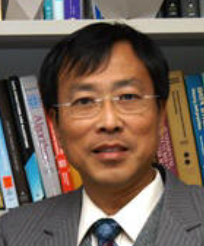
Prof. Francis Y.L. Chin
B.A.Sc.(Toronto); M.Sc., M.A., Ph.D.(Princeton); FIEEE, FHKIE, FHKACE (Hon.)
Honorary Professor of Computer Science, The University of Hong Kong, Pokfulam Road, Hong Kong
Title of Keynote Speech: Development and Future of Deep Learning
Abstract: Over the past decade, Deep Learning has already demonstrated great success across many applications from AlphaGo, translation, chatbots (LLMs and ChatGPT), Generative AI to AI agents. We envision that Deep Learning has demonstrated great potential in many other areas of research and applications.
In this talk, we shall revisit the development of Deep Learning, explain the key technologies for its success and how Deep Learning works. Finally, we shall give insights on the future development of Artificial Intelligence.
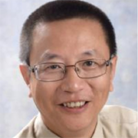
Distinguished Teaching Professor, State University of New York
Department of Curriculum and Instruction, School of Education, State University of New York at Oswego. His research interests include distance/flexible education, technology literacy and integration, and e-learning experience management.
Title of Keynote Speech: From Local Policy to Global Pedagogy: Empowering Educators for the Age of AI
Abstract: Drawing on AI literacy, technology policy, and pedagogy across global, national, higher education, and local school district levels, this keynote explores how teacher educators, district leaders, and classroom teachers can lead the shift to a digital environment without sacrificing pedagogical autonomy. The speech examines the core principles and stresses the technical, ethical, and human skills educators need today. The keynote also provides practical strategies to improve educators' AI literacy, thus enabling both pre-service and in-service teachers to become confident designers of AI-augmented learning environments.

Prof. Yuriy Ushenko
World's Top 2% Research Scientist. Nominee of The Photonics100 2025 list by ElectroOptics. Winner of 1000 Talents Plan Program, PhD, DSc, Prof., at Shaoxing University, Shaoxing, Zhejiang Province 312000, China. Professor, Head of Computer Science Department, Chernivtsi National University, Ukraine.
Title of Keynote Speech: Next-generation 3D Jones-matrix reconstruction: mapping multifractal optical anisotropy in complex soft matter architectonics
Abstract: A complex polarization-interference Jones-matrix polarimetry approach with digital holographic reconstruction and phase scanning of coherent speckle fields is proposed for the analysis of optically anisotropic architectonics in dehydrated biological fluid films. The method reconstructs complex-amplitude Jones-matrix images and differentially maps the scalar magnitudes of linear birefringence and linear dichroism, as well as circular birefringence and circular dichroism, which characterize the local strength of structural anisotropy and optical activity in supramolecular polycrystalline networks. A phase-selection procedure based on depolarization control is used to isolate the minimally scattered, predominantly ballistic component of the speckle field, thereby improving the physical correspondence between reconstructed Jones-matrix parameters and local mechanisms of optical anisotropy.
Registration Fee
| Registration | Registration Fee | Extra page |
| Regular Authors (Before 28 September 2026) | 450 USD | 50 USD |
| Regular Authors (After 28 September 2026) | 500 USD | 50 USD |
| Student Authors | 380 USD | 50 USD |
| Keynote Speakers | Free | |
| Authors (Kazakhstan, Uzbekistan, Ukraine, Kyrgyzstan, Tajikistan, Turkmenistan, Azerbaijan) | 400 USD | 50 USD |
| ICICS Members | 400 USD | 50 USD |
| ICICS Members (Kazakhstan, Uzbekistan, Ukraine, Kyrgyzstan, Tajikistan, Turkmenistan, Azerbaijan) | 350 USD | 50 USD |
Payment Rules
1. After complete the registration payment, the ordinary VAT invoice as a proof of payment will be issued.
2. The registration fee will not be refunded for any reasons.

Guiyang is the capital of Guizhou province in the People's Republic of China. It is centrally located within the province, on the eastern part of the Yunnan–Guizhou Plateau, and sits on the north bank of the Nanming River, a tributary of the Wu River. The city is situated at an elevation of approximately 1,100 meters (3,600 ft) and covers an area of 8,034 square kilometers (3,102 sq mi). According to the 2020 census, Guiyang had a total population of 5,987,018, with 4,506,134 lived in its six urban districts. Despite being the capital of Guizhou, it is not the largest city in the province, which is Zunyi.
Guiyang has a humid subtropical climate and is surrounded by mountains and forests. The area has been inhabited since at least the Spring and Autumn period and officially became the provincial capital in 1413, during the Ming dynasty. The city is home to a significant Miao and Bouyei ethnic minority population.
Guiyang has a diversified economy, historically known for aluminum production, phosphate mining, and optical instrument manufacturing. Following economic reforms, the service sector now contributes the majority of the city's economic output. Since 2015, targeted developments in big data have helped Guiyang rapidly emerge as a local innovation hub.
As of 2025, Guiyang is ranked among the top 150 science cities globally based on scientific research outputs, as tracked by the Nature Index. The city is also home to Guizhou University, a national research university under the Project 211 and designated for the Double First-Class Construction in certain disciplines.
Wuhan University of Technology, China
Hubei Women's Association for Science and Technology, China
Polish Operational and Systems Society, Poland
Hubei University of Technology, China
Wuhan Textile University, China
Wuhan Technology and Business University, China
National Technical University of Ukraine "Igor Sikorsky Kyiv Polytechnic Institute", Ukraine
International Center of Informatics and Computer Science, Hong Kong, China
International Research Association of Modern Education and Computer Science, Hong Kong
Coming soon...
AIMEE2017
AIMEE2018
AIMEE2019
AIMEE2020
AIMEE2021
AIMEE2022
AIMEE2023
AIMEE2024
AIMEE2025
The Secretary of AIMEE2026
Email: aimee@icics.net
